
📅 Last updated: April 8, 2026
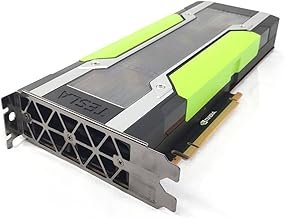
Ten years ago this month, Nvidia quietly changed the trajectory of modern computing. At ISC 2016, the company unveiled the Tesla P100 — a data center GPU built on the Pascal architecture and the first product in the industry to ship with HBM2 memory. At the time, the machine learning community was still a niche audience. The P100 helped it become a mainstream one. Fast forward to 2026, and renewed units are selling on Amazon for $167.29. That price tag raises a legitimate question: does this historic piece of silicon still earn a place in a modern lab or workstation?
The short answer is: more than you might expect. The Tesla P100 is not a gaming GPU, and it never was. It was engineered from the ground up for compute workloads — FP16 tensor operations, massive memory bandwidth, and sustained throughput without the thermal throttling that plagued consumer cards of its era. A decade later, those same characteristics make it a surprisingly capable entry point for researchers, students, and developers who need a real compute GPU without a four-figure budget.
At a Glance
- Architecture: Pascal (GP100 die)
- Memory: 16 GB HBM2
- Memory Bandwidth: 720 GB/s
- FP32 Performance: 9.3 TFLOPS (SXM2) / 5.3 TFLOPS (PCIe)
- FP16 Performance: 18.7 TFLOPS (SXM2) / 10.6 TFLOPS (PCIe)
- Interface: PCIe 3.0 x16 (this listing)
- Cooling: Passive (requires server chassis airflow)
- TDP: 250W
- Current Amazon Price: $167.29 (Renewed)
Pascal Architecture: What Made It Different
The GP100 die at the heart of the Tesla P100 was Nvidia’s first chip purpose-built for the deep learning explosion that was just beginning in 2016. Unlike the GP102 powering the GTX 1080 Ti or the GP106 inside the GTX 1060, the GP100 was never intended for consumer desktops. Nvidia gave it a full 60 streaming multiprocessors, 3,584 CUDA cores, and — crucially — HBM2 stacked memory instead of GDDR5.
That HBM2 decision was significant. At 720 GB/s, the P100’s memory bandwidth nearly tripled what the GTX 1080 Ti could offer at the time. In memory-bandwidth-bound workloads — which describes the bulk of neural network training — that gap translated directly into faster iteration cycles. The card also supported NVLink on its SXM2 variant, enabling multi-GPU configurations with 160 GB/s bidirectional throughput. The PCIe version reviewed here doesn’t have NVLink, but it retains the full 16 GB HBM2 pool, which remains genuinely useful in 2026.
Performance in 2026 — Honest Expectations
Running this GPU in 2026 requires a clear-eyed perspective. For gaming: don’t. The P100 has no display outputs, runs passively, and was never designed for rasterization workloads. For CUDA-based compute, PyTorch training on small-to-medium models, or inference tasks: it holds up better than most people expect.
In FP32 matrix operations, the PCIe P100 sits roughly in the same ballpark as a GTX 1070 Ti — not cutting-edge, but entirely functional. Where it genuinely pulls ahead of old consumer cards is the 16 GB memory pool. Running a mid-size language model or a fine-tuning job that would OOM on a consumer 8 GB card becomes viable here. For students training their first transformer models, researchers working with legacy CUDA codebases, or labs that need a cheap inference endpoint, the P100 remains a legitimate option.
Driver support is another factor to consider. The P100 requires CUDA 8.0 or later and is well-supported in current PyTorch and TensorFlow releases. CUDA 12.x works without issue, and the card shows up correctly in nvidia-smi on modern Linux distributions. Windows support exists but data center GPUs have traditionally been managed under Linux environments, and that assumption holds here.
Pros and Cons
👍 What We Like
- 16 GB HBM2 — a large VRAM pool that still matters for training jobs
- 720 GB/s memory bandwidth — rare at this price point in 2026
- Full CUDA support in modern frameworks (PyTorch, TensorFlow, JAX)
- Passive cooling — no fan noise, reliable in server environments
- Sub-$170 renewed pricing makes it genuinely accessible
- Battle-tested reliability — these cards logged millions of hours in data centers
👎 What Could Be Better
- No display output — purely a compute card
- Requires server chassis airflow (passive cooling only)
- 250W TDP is high for a 10-year-old workload card
- No Tensor Cores (those arrived with Volta in 2017)
- Renewed stock varies — condition and seller matter more than with new hardware
Who Should Buy the Tesla P100?
The Tesla P100 makes the most sense for anyone building a home lab or budget compute cluster who needs real VRAM capacity without paying for a modern A-series or H-series card. Machine learning students running PyTorch experiments, researchers who need a CUDA-capable GPU for legacy HPC code, and small labs that need a cheap inference node will all find fair value here at $167. The card is equally compelling as a secondary GPU in a workstation that already has a consumer card for display — the P100 handles training jobs in the background while your RTX handles the monitor output.
Who Should Skip This?
If you need gaming performance, skip immediately — there’s no display output and this card was never designed for rendering workloads. If you’re doing production AI training at scale, the P100 will bottleneck you quickly compared to A100 or H100 hardware. And if you can’t provide adequate airflow in your chassis, the passive cooling design will cause thermal issues; this GPU expects to sit in a server rack with positive airflow, not an open-air desktop build.
Pricing & Value
At $167.29 for a renewed unit, the Tesla P100 sits in a peculiar spot in 2026’s GPU market. You can’t buy a new one — Nvidia stopped making Pascal data center cards years ago. What you’re purchasing is refurbished data center surplus, and the condition of that hardware varies by seller. The listing linked here is a Centernex-renewed unit, and comparable refurbished P100s from HP and other sources run between $170 and $300 depending on the reseller. The $167 entry point is the lowest we’ve seen. Read more on AiGigabit
Top Alternatives on Amazon

Nvidia Tesla P100 900-2H400-0000-000 GPU Computing Processor – 16 GB – HBM2 – PCIE 3.0 X16 (Certified Refurbished)
$172.13
As an Amazon Associate, AiGigabit earns from qualifying purchases.

HP nVidia Tesla P100 16GB PCIe 3.0 x16 Passive Cooling GPU computing processor Q0E21A 900-2H400-0300-031 868199-001
$295.00
As an Amazon Associate, AiGigabit earns from qualifying purchases.

HP Q0E21A NVIDIA Tesla P100 16G GPU Card
$225.00
As an Amazon Associate, AiGigabit earns from qualifying purchases.
If you want to stay in the same price tier with more modern compute architecture, there are a few paths worth considering. The Nvidia Tesla P100 (HP OEM, certified refurbished) runs around $295 but comes with stronger seller certification. For a step up in pure compute with Tensor Core support, refurbished Nvidia Tesla V100 units are available in the $300–$500 range — more expensive but a meaningful generational leap for FP16 and INT8 workloads. If your budget is strictly sub-$200 and compute throughput matters more than VRAM, a used RTX 3060 12GB can be a pragmatic alternative for home lab use, though you’ll sacrifice the memory bandwidth advantage. Read more on AiGigabit
Bottom Line — Should You Buy the Nvidia Tesla P100?
The Tesla P100 turning 10 years old doesn’t make it obsolete — it makes it historic hardware at a price that’s finally within reach of individual buyers. For its original purpose (large-scale FP16 compute, HPC workloads, neural network training) it still delivers real capability. The 16 GB HBM2 pool and exceptional memory bandwidth are strengths that many modern consumer GPUs at similar prices simply can’t match. If you’re building a budget AI workstation, a CUDA learning environment, or a home lab inference server and you can work around the passive cooling requirement, this is a genuinely solid buy in 2026.
Verdict Score: 7.5/10 — A landmark GPU at a landmark price. Not for everyone, but excellent value for the right use case.
Frequently Asked Questions
Is the Nvidia Tesla P100 worth buying in 2026?
Yes, for specific use cases. The Tesla P100’s 16 GB HBM2 and 720 GB/s memory bandwidth make it a strong budget compute GPU for machine learning training, CUDA development, and inference workloads. It’s not suitable for gaming or any task requiring a display output, but for pure compute at under $170 renewed, it offers value that few alternatives can match at this price.
Can the Tesla P100 run modern deep learning frameworks like PyTorch and TensorFlow?
Yes. The P100 is fully supported in current PyTorch and TensorFlow releases via CUDA 8.0 and later. CUDA 12.x works without issues. The card performs well for training small-to-medium models and fine-tuning jobs that fit within its 16 GB memory pool. It lacks Tensor Cores (introduced with Volta), so mixed-precision training won’t see the same speedups as on V100 or A100 hardware.
What’s the difference between the Tesla P100 PCIe and SXM2 versions?
The PCIe version (this listing) uses a standard PCIe 3.0 x16 slot and delivers 5.3 TFLOPS FP32 / 10.6 TFLOPS FP16. The SXM2 version connects via Nvidia’s proprietary mezzanine interface, achieves higher clock speeds (9.3 TFLOPS FP32), and supports NVLink for multi-GPU configurations. The SXM2 requires a compatible server board and is much harder to source. For most home lab and workstation builds, the PCIe version is the practical choice.
Does the Tesla P100 require special cooling?
The P100 uses passive cooling only — no onboard fan. It’s designed to operate inside server chassis with forced airflow across the card. In a standard desktop case or open-air build, it will overheat under sustained load. You’ll need a case or enclosure with adequate airflow or an active cooling solution to run this GPU outside a server rack safely.
How does the Tesla P100 compare to the GTX 1080 Ti for compute workloads?
For gaming the GTX 1080 Ti wins decisively — the P100 has no display output. For compute, the P100 pulls ahead in memory-bandwidth-heavy tasks thanks to its 720 GB/s HBM2 vs the 1080 Ti’s 484 GB/s GDDR5X. The P100’s 16 GB VRAM pool also significantly outlasts the 1080 Ti’s 11 GB when training larger models, making it the better card for serious ML workloads despite being released around the same time.
Stay up to date with the latest GPU deals and tech hardware news at AiGigabit.com. Bookmark us for daily updates.