
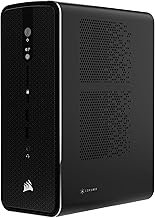
The hardware landscape of 2026 has been anything but predictable, and the latest news surrounding Corsair’s Strix Halo AI Workstation 300 is the perfect example of the chaos. Just as AMD’s high-performance APU architecture started to find its groove, the global “RAMpocalypse” hit. We are now seeing the flagship configuration—the one powered by the formidable Ryzen AI Max 395+—creep up to a staggering $3,399. It’s a bitter pill for power users who were hoping that integrated silicon would finally lower the entry cost for high-end AI workstations.
Positioned as the ultimate small-form-factor powerhouse, the Strix Halo AI Workstation 300 was designed to prove that you don’t need a discrete GPU to crush heavy workloads. Corsair took a gamble on AMD’s massive “Halo” chips, which fuse high-performance Zen 5 cores with massive RDNA 3.5 graphics clusters. But as memory prices skyrocket—and since these chips rely on massive pools of shared LPDDR5X—the cost of building these machines is spiraling out of control. It puts Corsair in an awkward spot: selling a mini-PC at the price of a full-tower Threadripper rig.
What You’re Actually Getting
The Strix Halo AI Workstation 300 isn’t just another mini-PC with a beefed-up laptop chip. It is a fundamental shift in how we think about compute density. By using the Ryzen AI Max 395+, Corsair is giving you 16 full-fat Zen 5 cores alongside a graphics engine that rivals a mobile RTX 4070 or 5060. Because the memory is unified—meaning the CPU and GPU share the same lightning-fast 256-bit memory bus—data-heavy AI tasks don’t get bottlenecked by the usual PCIe travel times.
However, the catch in 2026 is that this unified memory is soldered. In the midst of the RAMpocalypse, you cannot simply buy a base model and upgrade it yourself later. You are locked into whatever Corsair decides to charge for those LPDDR5X modules at the time of purchase. This “all-in” approach makes the machine incredibly efficient and compact, but it also makes the $3,399 price tag feel like a hostage situation if you actually need the 96GB or 128GB configurations for LLM training.
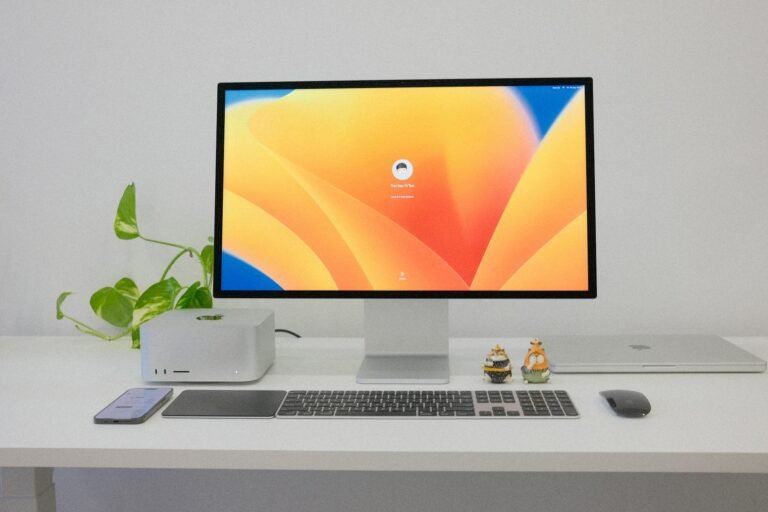
This is essentially the “Mac Studio of the PC world”—it offers unparalleled bandwidth for local AI workloads, but the entry fee has reached a point where a dedicated desktop might actually be cheaper.
Performance: The Numbers That Matter
When you look at the raw benchmarks, the Ryzen AI Max 395+ is a monster. In multi-threaded rendering tasks, it trades blows with 65W desktop chips, which is a massive feat for a system this size. But the real story is the NPU. With XDNA 2 architecture delivering over 50 TOPS, local AI generation—things like Stable Diffusion XL or local LLMs—runs with a level of snappiness that makes standard laptops feel like they’re stuck in 2023.
Gaming performance is surprisingly competent, too. You can comfortably run modern titles at 1440p with high settings, which is unheard of for “integrated” graphics. But let’s be honest—you aren’t spending over three thousand dollars to play games. You’re buying this because you need a quiet, compact box that can handle massive data sets or complex video timelines without the thermal footprint of a traditional workstation.
The Good and the Not-So-Good
There is a lot to love about the engineering here. Corsair’s cooling solution is genuinely impressive; the Workstation 300 manages to stay whisper-quiet during light tasks, and even under load, it’s far less intrusive than a gaming laptop. The port selection is also top-tier, featuring dual USB4 ports and multiple 2.5GbE jacks, which makes it a dream for creative professionals who live and die by their external NVMe arrays.
👍 What We Like
- Industry-leading unified memory bandwidth for AI
- Exceptional performance-to-size ratio
- Ultra-quiet cooling even under heavy CPU load
👎 What Could Be Better
- Price has become prohibitive for mid-range pros
- Zero internal upgradeability for RAM
- Lacks a dedicated SD card slot for creators
The “RAMpocalypse” surcharge is the elephant in the room. Paying $3,399 for a machine without a dedicated GPU—regardless of how powerful the APU is—feels like a regression in value. Two years ago, we were promised that integrated chips would simplify builds and lower prices. Instead, the soldered memory requirement has given manufacturers a perfect excuse to charge “Apple-tier” premiums for every extra gigabyte of RAM.
Who Is This Actually For?
This is a specialist tool through and through. If you are an AI researcher who needs to run 70B parameter models locally on a machine that fits in a messenger bag, the Strix Halo AI Workstation 300 is currently unrivaled in the Windows ecosystem. It provides a level of unified memory access that you simply cannot get from a traditional motherboard-plus-GPU setup without spending five figures on enterprise-grade hardware.
✅ Buy This If…
- You need high-capacity unified memory for local LLMs
- You require a silent but powerful creative workstation
- Desk space is at an absolute premium
❌ Skip This If…
- You are a gamer (get a dGPU system instead)
- You plan on upgrading your RAM in a year or two
- You have the space for a full-sized desktop tower
However, if your work doesn’t explicitly benefit from unified memory, the value proposition collapses. A standard ATX build with an RTX 5080 will outperform this machine in 3D rendering and gaming for roughly the same price—or less—even with inflated RAM costs. You’re paying for the miniaturization and the specific architectural advantages of Strix Halo.
Compared to the Competition
The only real competition for this unit comes from Apple. The Mac Studio has long been the king of unified memory workstations, and the latest M4 Ultra models are still the benchmarks to beat. In the PC space, ASUS and Minisforum have released Strix Halo systems, but Corsair’s build quality and thermal management usually justify a slight premium—though maybe not this much of one.
| Workstation | Price | CPU | GPU | RAM | Best For |
|---|---|---|---|---|---|
| Strix Halo 300 ★ Our Pick | $3,399 | Ryzen AI Max 395+ | RDNA 3.5 (40CU) | 96GB LPDDR5X | Local AI/LLMs |
| Mac Studio (M4 Max) | $3,199 | M4 Max (16-core) | 40-core GPU | 64GB Unified | Video Editing |
| ASUS ROG NUC 2026 | $2,499 | Core Ultra 9 | RTX 5070 Mobile | 32GB DDR5 | Gaming/General |

Corsair AI Workstation 300 Desktop PC – AMD Ryzen AI Max 385 CPU – AMD Radeon 8050S iGPU (Up to 48GBs vRAM) – 64GB LPDDR5X 8000MHz Memory – 1TB M.2 SSD – Black
$1,699.99
As an Amazon Associate, AiGigabit earns from qualifying purchases.
Value Assessment
It is difficult to call a $3,399 mini-PC a “good value” in a year where hardware costs are inflating across the board. However, you have to look at what you aren’t buying. You aren’t buying a $1,200 GPU and a $600 motherboard separately. You are buying a single, integrated ecosystem that offers bandwidth that was previously reserved for the ultra-enthusiast tier. If you can amortize this cost over three years of professional AI development, the math might still work in your favor.
That said, if the RAMpocalypse continues into late 2026, we might see Corsair forced to offer lower-tier memory configurations just to keep the “starting at” price from hitting four thousand dollars. For now, if you need this specific set of skills, you’ll have to pay the premium. Check the official site for the latest lead times, as these flagship units are still being built in limited batches.
Final Verdict
The Corsair Strix Halo AI Workstation 300 is a victim of its own ambition. It’s a machine that wants to be the future of PC computing—integrated, efficient, and incredibly dense—but it’s being dragged down by the reality of 2026 memory pricing. If you are one of the few who can actually leverage the unified 96GB bus for specialized AI tasks, it is an essential tool that has no Windows-based equal.
For everyone else, the current pricing makes it a luxury item rather than a smart buy. It’s a showcase of what AMD and Corsair can do when they collaborate on flagship silicon, but until the RAMpocalypse subsides, it remains a niche flagship for the elite few. We love the performance, we love the silence, but we certainly don’t love that invoice.
See our Best AI Workstations 2026 roundup — updated monthly with the top picks and deals.
Frequently Asked Questions
Why is the Strix Halo AI Workstation 300 so expensive?
The primary reason is the “RAMpocalypse” of 2026. This machine uses massive amounts of unified LPDDR5X-8533 memory, which is currently seeing extreme price hikes. Additionally, the flagship Ryzen AI Max 395+ is a large, expensive-to-produce piece of silicon that combines high-end CPU and GPU performance on a single die.
Can I use a dedicated GPU with this workstation?
No. The Workstation 300 is designed entirely around the Strix Halo APU. There is no internal PCIe slot for a graphics card. However, you can connect an eGPU via the USB4 ports, though doing so would negate many of the architectural benefits of the unified memory system.
Is the memory upgradeable?
Unfortunately, no. Like most systems using LPDDR5X to achieve high bandwidth, the memory is soldered directly to the motherboard. You must choose your memory capacity (up to 128GB on certain SKUs) at the time of purchase.
How does it compare to the Mac Studio?
In terms of unified memory bandwidth, the Strix Halo 300 is the first Windows machine to truly compete with Apple’s M-series silicon. It offers a more open software environment for AI development (especially for libraries optimized for ROCm or Vulkan) but often comes at a higher price and higher power draw than the Mac Studio.
Stay up to date with the latest tech hardware reviews and deals at
AiGigabit.com. Bookmark us for daily updates.