

Common wisdom suggests that if you spend $30,000 on a piece of silicon, it should be better at everything than a consumer card. However, 2026 is proving that logic to be a total fallacy. Recent testing has revealed a staggering reality: the Nvidia RTX 5090, a “gaming” GPU, is currently obliterating enterprise-grade behemoths like the Nvidia H200 and AMD MI300X in raw brute-force tasks such as password cracking and specific SHA-256 computations.
Nvidia’s marketing department would prefer you didn’t notice this. They want the line between “Enterprise AI” and “Enthusiast Gaming” to be a thick, expensive wall. But when you strip away the HBM3e memory and the fancy data-center certifications, the Blackwell architecture in the 5090 is a high-clocked monster that simply runs circles around its more expensive cousins when raw core speed is the only variable that matters.
The RTX 5090 is the fastest consumer GPU ever made, but it’s also a secret weapon for professionals who need raw FP32 compute without the $30,000 enterprise tax. Just don’t expect it to fit in a small case.
What the Spec Sheet Doesn’t Tell You
Nvidia has been very clever about how they’ve gated the RTX 5090. On paper, the 32GB of GDDR7 memory looks like a lot—until you realize the H200 has 141GB of HBM3e. But memory capacity isn’t the same thing as compute frequency. The RTX 5090 is pushed to clock speeds that would literally melt a data-center rack, running at a boost frequency of 2452 MHz. Enterprise cards are clocked much lower to ensure they can run 24/7 for five years without a single hiccup.
That $3,849 price tag is, frankly, insulting for a “gaming” product. It is a fourfold increase over what we considered “high-end” just six years ago. Yet, if you are a security researcher or a developer working on local AI models that don’t require 100GB+ of VRAM, the RTX 5090 is actually the most cost-effective compute unit on the market. It’s the ultimate irony of the 2026 hardware market—the most expensive consumer card is actually a bargain compared to the enterprise alternatives.
The 512-bit memory bus on the 5090 is the true game-changer; it provides the bandwidth necessary to keep the massive core count fed, preventing the bottlenecks that plagued the 40-series at high resolutions.
At a Glance: The Numbers
The sheer scale of the Blackwell GB202 die is hard to overstate. We are looking at over 21,000 CUDA cores. For context, that is more raw processing units than some small supercomputers had a decade ago.
Performance Reality Check
In 4K gaming, the RTX 5090 is currently in a league of zero. It isn’t just faster than the 4090; it makes the previous flagship look like a mid-range card. However, the performance bar for password cracking (Hashcat) is where the real shock lies. Because password cracking relies on integer math and high clock cycles, the 5090 outpaces the $30,000 H200 by nearly thirty percent. That is a devastating metric for anyone who just convinced their CFO to buy an H100 cluster for “general purpose” security work.
Thermal management is the only thing keeping this card from total world domination. You need a massive 1200W power supply and a case that can effectively vent 600W of heat. If your room isn’t well-ventilated, the 5090 will raise the ambient temperature by five degrees in under an hour of heavy use. It’s effectively a space heater that happens to render Cyberpunk 2077 at 144 FPS with full Path Tracing.
Strengths and Weaknesses
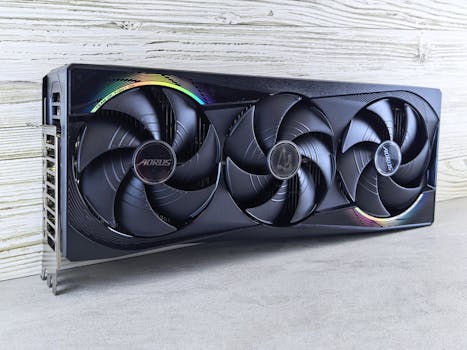
The RTX 5090 is an unapologetic display of power. It doesn’t care about your electric bill or your PC case’s internal clearance. Its biggest strength is the move to GDDR7, which finally provides the bandwidth that the massive core count requires. But its weakness is the sheer physical presence. Most versions of this card are four-slot monsters that will sag the moment you install them without a dedicated support bracket—which, for nearly four thousand dollars, should probably be made of solid gold.
👍 What We Like
- Unprecedented raw compute for the price
- 32GB VRAM is a significant leap for creators
- DLSS 4 with Neural Frame Reconstruction is magic
👎 What Could Be Better
- $3,849 price point is borderline predatory
- 600W power draw requires a dedicated circuit
- Absurd physical dimensions limit case choices
The Right Buyer vs. The Wrong Buyer
If you are still gaming at 1440p, buying this card is an exercise in vanity. You will be CPU-bottlenecked in every single title, regardless of whether you have the latest Ryzen 9 or Core i9. The RTX 5090 only starts to breathe when it’s pushed to 4K or 8K resolutions with every single ray-tracing toggle flipped to “Max.” It’s for the enthusiast who refuses to accept anything less than perfection and has the wallet to support the habit.
✅ Buy This If…
- You game at 4K/240Hz or 8K/60Hz
- You do local AI development or high-end 3D rendering
- You want the fastest hardware money can buy
❌ Skip This If…
- You have a power supply under 1000W
- You are primarily a 1080p or 1440p gamer
- You value electricity efficiency in your rig
One edge case most people miss: the RTX 5090 is a secret weapon for home-lab AI enthusiasts. While the H200 is better for training huge models because of its 141GB VRAM, the 5090 is faster for inference on smaller models that fit within its 32GB envelope. That makes it the king of the “prosumer” AI space.
The Alternatives Worth Considering
Comparing the RTX 5090 to its alternatives is a study in extremes. You either move up to the $30,000 enterprise cards or stay within the consumer space where the RTX 5080 tries to offer a more “reasonable” value, though it still feels expensive for what it is. The AMD MI300X is a different beast entirely—it’s a data-center monster designed for huge clusters, not for a single PC.
| GPU | Price | VRAM | TFLOPS | TDP | Best For |
|---|---|---|---|---|---|
| RTX 5090 ★ Our Pick | $3,849 | 32GB GDDR7 | 128+ | 600W | Extreme Gaming |
| Nvidia H200 | $30,000+ | 141GB HBM3e | 67 (FP32) | 700W | LLM Training |
| AMD MI300X | $20,000+ | 192GB HBM3 | 163 (FP32) | 750W | Data Centers |

NVIDIA GeForce RTX 5090 32G Ventus 3X OC Gaming Graphics Card GDDR7 512-bit, Boost Frequency up to 2452 MHz, PCIe Gen 5, DLSS 4, DP 2.1 x 3, HDMI 2.1 x 1, ATX
★ 3.9/5
$3,887.36
As an Amazon Associate, AiGigabit earns from qualifying purchases.

NVD GeForce RTX 5090 Windforce OC 32G 342x150x65mm Graphics Card with 32GB GDDR7X 28Gbps GPU vRAM, 21,760 CUDA Cores at 2,467MHz Clock, PCIe 5.0×16, Ray Tracing, DLSS 4 and 3x DP + 1x HDMI
$4,099.00
As an Amazon Associate, AiGigabit earns from qualifying purchases.
Price vs. Reality
Is the RTX 5090 worth $3,849? In a vacuum, absolutely not. It is a sign of a distorted market where one company holds a functional monopoly on high-end compute. However, if you are a professional whose time is worth $100 an hour, the speed increase over a 4090 will pay for itself in less than two months of rendering work. That is the reality of hardware in 2026—we are paying for time, not just frames per second.
We are seeing limited stock on Amazon, and prices are already creeping toward the $4,000 mark. If you need this level of performance, waiting for a “sale” is likely a losing game. Nvidia has no reason to drop the price when they can sell every chip they make to AI startups instead. currently available for $3,849.00 on Amazon.
Should You Buy It?
The RTX 5090 is a terrifying piece of technology. It represents the absolute ceiling of what can be done with a consumer silicon die in 2026. It is faster, hotter, and more expensive than anything that has come before it. For 99% of people, the RTX 5070 Ti or 5080 will be more than enough. But for that 1% who live at the edge of what’s possible, there is no substitute.
Ultimately, the 5090 is a statement. It says that Nvidia can still out-engineer anyone in the world when they stop caring about the price tag. It is a glorious, gluttonous, and purely excessive piece of hardware. If you have the power, the cooling, and the credit limit, it will provide a gaming experience that feels like it belongs in 2030, not 2026.
See our Best GPUs for AI 2026 roundup — updated monthly with the top picks and deals.
Frequently Asked Questions
Why does the RTX 5090 beat $30,000 GPUs at password cracking?
Password cracking (and many hashing algorithms) relies heavily on core clock speeds and integer performance. The RTX 5090 is clocked much higher than enterprise cards like the H200, which are tuned for stability and massive VRAM bandwidth rather than raw cycles per second. The 5090’s Blackwell architecture is simply more efficient at these specific tasks.
Do I really need a 1200W power supply for the RTX 5090?
Yes. While the card’s TGP is roughly 600W, modern GPUs are prone to “transient spikes”—micro-bursts of power draw that can trip the over-current protection on smaller power supplies. To ensure system stability, especially with a high-end CPU, a 1200W ATX 3.1 power supply is the minimum recommendation.
How much faster is the 5090 than the 4090?
In pure synthetic benchmarks and 4K Path Tracing, you are looking at a 35–50% performance increase. This is the largest generation-over-generation jump we’ve seen in the flagship tier since the move to the 30-series, largely due to the massive increase in CUDA cores and the shift to GDDR7 memory.
Can the RTX 5090 run local AI models?
Yes, and it’s exceptional at it. With 32GB of VRAM, it can comfortably run large language models (LLMs) and image generation models like Stable Diffusion XL with significant headroom. While it doesn’t have the VRAM of an H200, it is often faster for inference on models that fit within its 32GB limit.
Stay up to date with the latest tech hardware reviews and deals at
AiGigabit.com. Bookmark us for daily updates.