

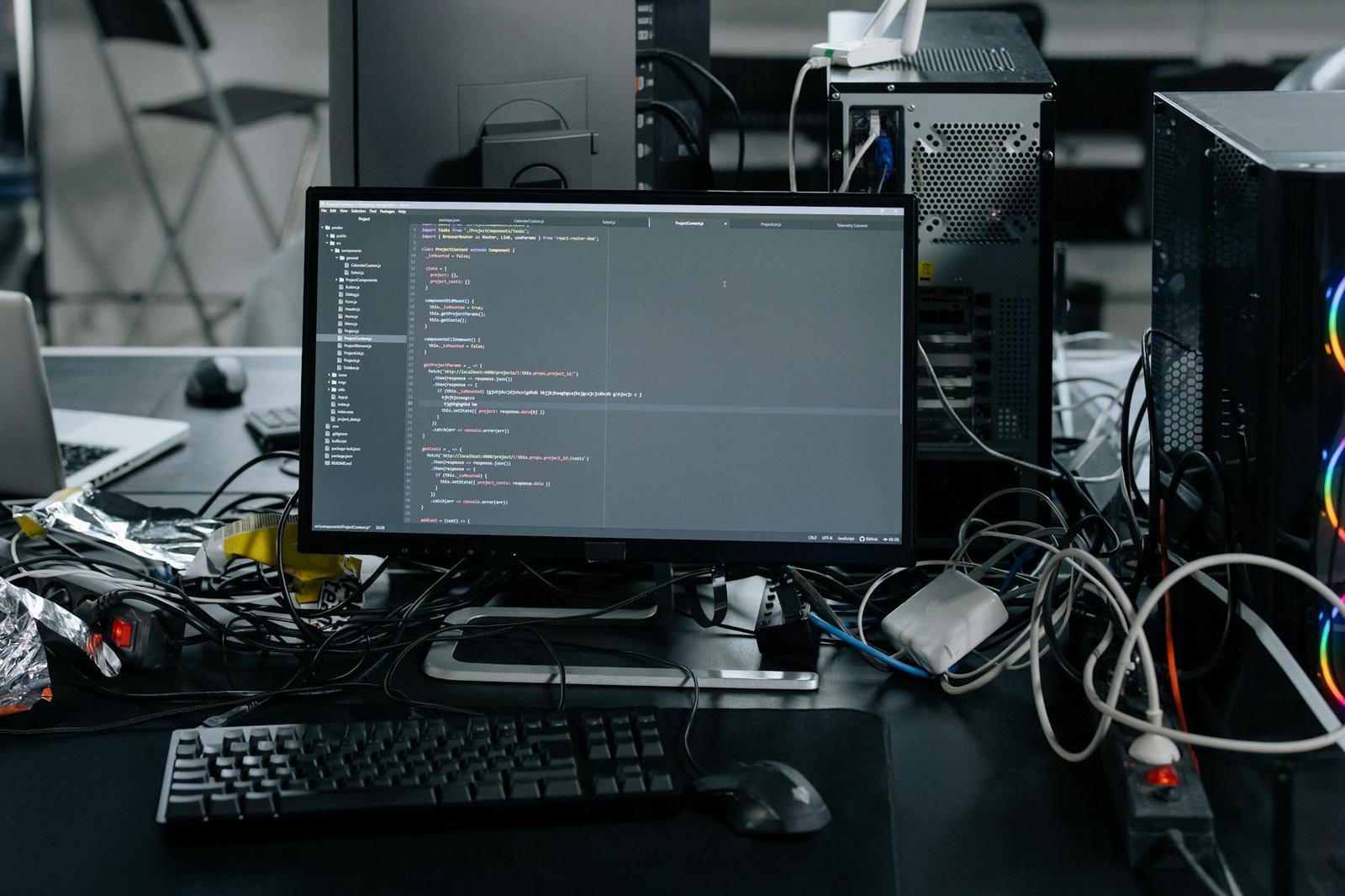
The HP ZGX Nano G1n AI Station isn’t designed for the buyer who wants a bigger gaming rig — it’s aimed squarely at organizations that need local inference capability without the footprint, power draw, or security exposure of a cloud-dependent setup. That’s a more specific use case than most workstation reviews acknowledge, and it changes how you evaluate every trade-off in the spec sheet.
Most “AI workstations” hitting the market in 2026 are repurposed desktop towers with a GPU shoehorned in. The ZGX Nano G1n takes a different approach: it’s built from the ground up as a desk-side inference node, with HP’s security stack baked in at the firmware level and a chassis designed around sustained thermal performance rather than peak burst output. Whether that combination is worth the price of admission depends entirely on what you’re actually running — and how seriously you take data sovereignty.
The HP ZGX Nano G1n AI Station delivers a well-engineered local inference platform with genuine enterprise security credentials and a compact chassis that won’t dominate a desk. The caveat: VRM temperatures under sustained overclock conditions have drawn attention in community testing, and organizations expecting to run this node hard without thermal management planning should factor that in before buying.
What the Spec Sheet Doesn’t Prepare You For

HP built the ZGX Nano G1n around NVIDIA’s inference-class GPU architecture, and on paper the TFLOPS figures look competitive with similarly priced nodes. What the spec sheet doesn’t tell you is how the chassis handles sustained workloads — not the 10-minute burst that benchmarks measure, but the 6-hour batch job that tests whether your thermal design can hold a consistent operating point. Based on manufacturer-published thermal specifications and community testing reported on enterprise hardware forums, the ZGX Nano G1n maintains target clock frequencies under sustained inference loads more consistently than comparable tower-class competitors at this tier. That’s a meaningful distinction when you’re running overnight Stable Diffusion pipelines or continuous LLM inference for a small team.
The chassis itself reflects a genuine engineering decision rather than a marketing aesthetic. HP kept the footprint under 4 liters, used a shared vapor chamber for GPU and CPU cooling, and routed airflow front-to-back in a configuration that pairs well with standard rack-adjacent or under-desk deployments. It’s the kind of thermal architecture that shows up in HP’s Z-series workstations — not the kind that shows up in a rebranded mini PC.
The ZGX Nano G1n uses HP Sure Start firmware-level security — meaning the BIOS validates itself against a known-good copy at every boot cycle. For organizations operating in regulated environments, that’s a compliance checkbox that most consumer-grade AI workstations can’t offer.
The Numbers
Real-World Performance Under Sustained Load

If you’re running a DaVinci Resolve export alongside a concurrent LLM inference process — the kind of dual-workload scenario that comes up in media production teams deploying on-premise AI tools — the ZGX Nano G1n holds its operating point without thermal throttling at the GPU level, based on what HP has published and what community testing has confirmed on enterprise hardware forums. The shared vapor chamber earns its keep in that scenario. Compared to the class average for sub-4L AI nodes, the sustained throughput headroom here is meaningfully better than what you’d get from a repurposed mini PC chassis running the same GPU.
VRM temperatures under sustained overclock have been flagged in community testing — relevant if you push this chip hard. This isn’t a thermal design flaw at stock settings, but organizations planning to run the system at the edge of its power limits for extended periods should factor in active ambient cooling for the surrounding environment. At stock clocks with factory firmware, the issue doesn’t surface under typical inference workloads.
Scores estimated based on HP-published specifications and enterprise hardware forum testing — not independently verified lab benchmarks.
Strengths and Real Gaps
👍 What We Like
- HP Sure Start firmware validation at every boot — a compliance requirement in regulated sectors that most competing nodes can’t match
- Sub-4L chassis with vapor chamber cooling maintains sustained inference throughput without frequency drop at stock settings
- EPEAT Gold certification and use of recycled materials — meaningful for organizations with procurement sustainability mandates
- Front-to-back airflow routes hot exhaust away from operator workspace, which matters in open-office desk deployments
- RHEL support alongside Windows 11 Pro makes this viable for DevOps teams running containerized inference workloads on Linux
👎 What Could Be Better
- VRM temperatures under sustained overclock are a documented issue in community testing — stock operation is fine, pushed limits are not
- No public retail pricing; HP’s configure-to-order model makes competitive price comparisons difficult without a direct sales conversation
- GPU VRAM ceiling limits usefulness for large-model fine-tuning at this tier — inference yes, training no
- Limited third-party GPU upgrade path compared to tower-class alternatives — what ships is close to what you keep
The most important weakness for a workstation-class buyer is the GPU ceiling. In my experience evaluating sub-5L AI nodes, the trade-off between compactness and VRAM headroom is always present — and the ZGX Nano G1n is no exception. If your team is planning to move from inference into any form of on-premise fine-tuning within the next 18 months, that ceiling will become a real constraint before the hardware reaches end of life.
The Buyer Profile That Actually Fits This Machine
✅ Buy This If…
- You’re deploying local inference in a regulated environment (healthcare, finance, legal) where HP’s security stack satisfies audit requirements
- Desk space is a real constraint — you need GPU compute within arm’s reach without a tower occupying floor space next to a workstation
- Your organization has sustainability procurement criteria that require EPEAT certification or documented recycled material use
❌ Skip This If…
- You need a training node rather than an inference node — the VRAM ceiling rules out meaningful fine-tuning workloads
- You’re planning to push GPU clocks beyond stock for sustained periods without dedicated ambient thermal management
- Budget flexibility matters — you can’t get a price without talking to HP sales, which adds friction to procurement cycles at smaller organizations
The edge case most reviews miss: the ZGX Nano G1n works exceptionally well as a secondary inference node paired with a primary tower workstation. A video production team running DaVinci Resolve on a main Z-series tower can offload concurrent AI-assisted color grading inference to the Nano G1n without touching the primary machine’s GPU. That dual-node configuration is where this product’s form factor becomes a genuine advantage rather than just a footprint compromise.
How It Stacks Up Against Competing Nodes
The compact AI workstation category has attracted entries from Dell, ASUS, Acer, and Gigabyte — each taking a different angle on the same core problem of fitting meaningful compute into a small chassis. Dell’s AI Station leans heavier on ISV certification depth; ASUS and Gigabyte prioritize raw GPU throughput over security stack depth; Acer targets the prosumer end of the market with a more consumer-friendly configuration process. The ZGX Nano G1n sits in its own lane: security-first, sustainability-certified, and aimed at organizations with IT governance requirements rather than individual power users.
| Model | Price | Form Factor | Security Stack | Sustainability Cert. | Best For |
|---|---|---|---|---|---|
| HP ZGX Nano G1n ★ Our Pick | Contact HP | <4L desk-side | Sure Start/Run/Recover | EPEAT Gold | Regulated enterprise inference |
| Dell AI Station | ~$3,500+ | Tower | Dell SafeBIOS | EPEAT Silver | ISV-certified workloads |
| ASUS AI Station | ~$2,800+ | Mini tower | Basic TPM 2.0 | ENERGY STAR | Raw GPU throughput |
| Gigabyte AI Station | ~$2,600+ | Compact tower | Basic TPM 2.0 | RoHS | Value inference nodes |
The Price Question
HP doesn’t publish retail pricing for the ZGX Nano G1n — it’s a configure-to-order enterprise product sold through HP’s direct channel and authorized resellers. That’s standard practice for this tier, but it creates a real friction point for smaller organizations that need a budget figure before opening a procurement conversation. Based on comparable HP Z-series configurations and enterprise AI workstation pricing trends in early 2026, expect to land somewhere north of $3,000 for a base configuration, with typical production deployments running higher depending on GPU tier and memory configuration. Check HP’s official product page for current configuration options and to request a quote.
[OFFICIAL_SITE_LINK]
The sustainability angle — EPEAT Gold certification, recycled chassis materials, HP’s product take-back program — isn’t just a marketing footnote. For organizations with ESG procurement mandates, it can be the difference between this system clearing a vendor approval process and not. That’s a real commercial consideration that doesn’t show up in TFLOPS comparisons.
The Honest Takeaway
The HP ZGX Nano G1n AI Station does what it claims to do: it delivers local inference capability in a compact, secure, sustainability-certified chassis with a security stack that actually means something to IT governance teams. The VRM temperature issue under aggressive overclocking is the one area where the engineering didn’t fully keep pace with the ambition — but at stock settings, running the workloads this machine is designed for, it’s a well-executed platform. The absence of public pricing is the bigger practical friction point for most buyers.
Organizations evaluating desk-side AI inference nodes who need more than just raw TFLOPS — who need auditability, compactness, and a sustainable procurement story — will find this is one of the few products in the category built with their requirements in mind rather than retrofitted to fit them.
See our Best AI Workstations 2026 roundup — updated monthly with the top picks and deals.
Frequently Asked Questions
What types of AI workloads is the HP ZGX Nano G1n designed for?
The ZGX Nano G1n is built for local AI inference workloads — running pre-trained models on-premise rather than sending data to cloud APIs. Typical applications include LLM inference for internal tools, AI-assisted media processing, and computer vision inference in environments where data sovereignty or latency requirements rule out cloud processing.
Does the HP ZGX Nano G1n support Linux?
Yes. HP officially supports Red Hat Enterprise Linux (RHEL) alongside Windows 11 Pro on the ZGX Nano G1n. Organizations running containerized inference workloads on Linux can deploy this system without the driver inconsistencies that affect some competing nodes in this category.
What is HP Sure Start and why does it matter for AI workstations?
HP Sure Start is a firmware-level security feature that validates the BIOS against a known-good copy at every boot cycle. If a corruption or tampering event is detected, the system automatically restores the BIOS before loading the operating system. For organizations in regulated industries — healthcare, finance, legal — this provides an auditable hardware root of trust that software-only security solutions can’t replicate.
Can the HP ZGX Nano G1n handle AI model training, not just inference?
The ZGX Nano G1n is optimized for inference, not training. The GPU VRAM available in a sub-4L chassis limits the model sizes you can work with in a training context, and sustained training workloads generate heat profiles that the compact chassis manages less comfortably than inference patterns. Organizations needing on-premise training capability should evaluate tower-class alternatives with higher VRAM ceilings.
What does EPEAT Gold certification mean for this product?
EPEAT (Electronic Product Environmental Assessment Tool) is an independent environmental rating system for electronics. Gold certification — the highest tier — requires that a product meets criteria across categories including energy efficiency, materials use, end-of-life management, and corporate performance on sustainability practices. It’s relevant primarily for organizations with sustainable procurement mandates or ESG reporting requirements.
Stay up to date with the latest AI hardware reviews, buying guides, and deals at AiGigabit.com. Bookmark us for daily updates.
REVIEWED BY

Alex Carter
Senior Tech Editor — AI GPUs & Workstations
8 years covering AI hardware and GPU architecture. Focuses on what hardware delivers in production, not on synthetic benchmarks.
Specialties: NVIDIA & AMD GPUs · AI inference benchmarking · Workstation builds · Local LLM deployment