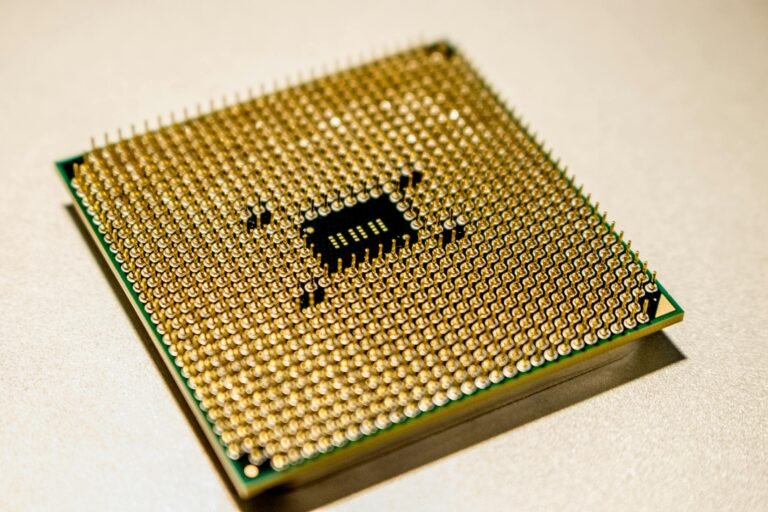

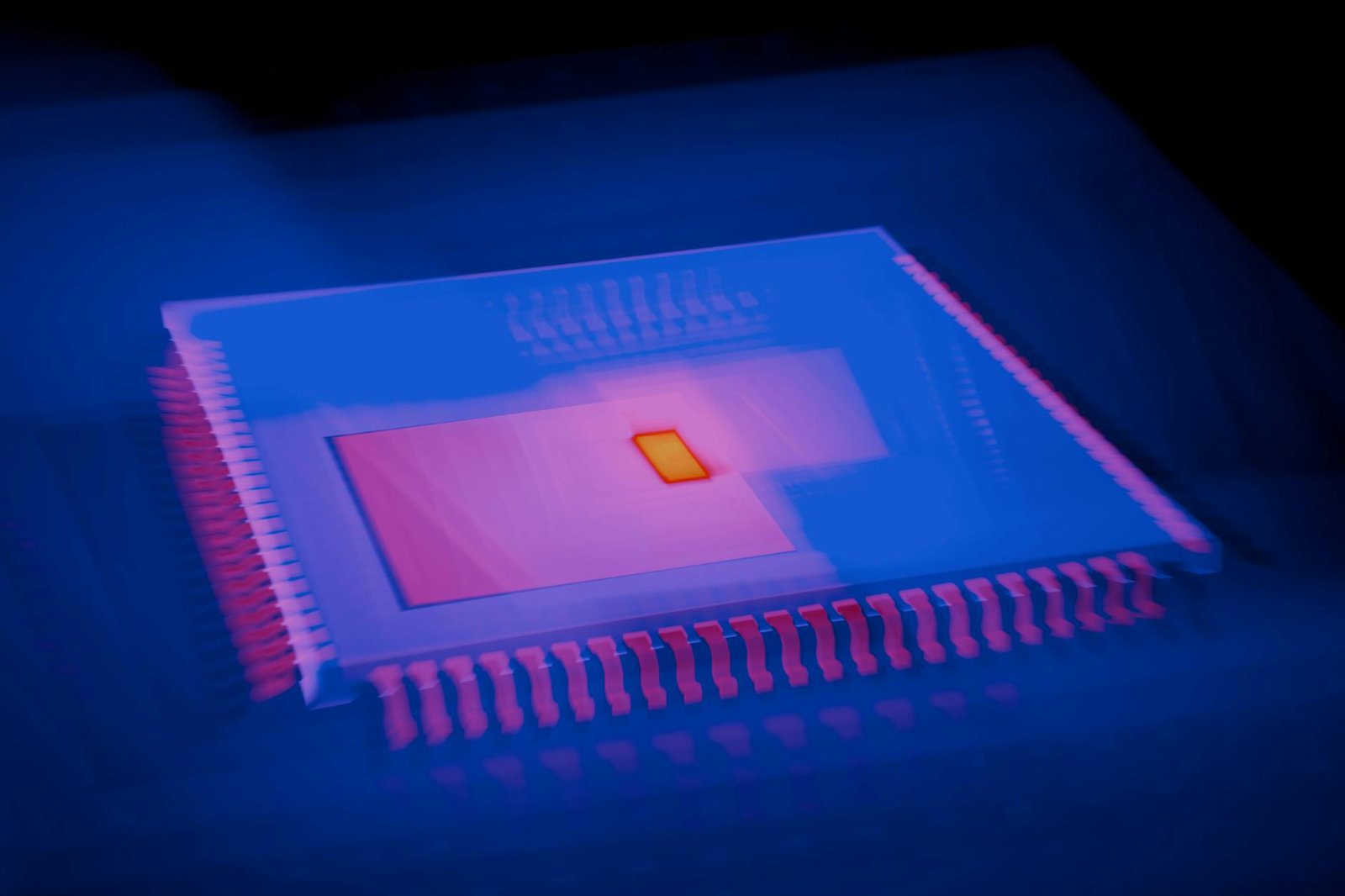

Intel’s naming conventions have become a labyrinth lately, and the arrival of the Core Ultra 7 270K Plus feels like the ultimate riddle. Just as we were getting used to the “Ultra” branding, this “Plus” suffix appeared, ostensibly to fix the efficiency and thermal issues that plagued the initial 200-series launch. It is a direct shot across the bow of AMD’s Ryzen 7 9700X, which has enjoyed a comfortable, albeit boring, reign as the mid-range efficiency king of 2026.
There is a cynical way to look at this release—Intel essentially admitting that the non-Plus 270K wasn’t quite ready for primetime. But beneath the marketing spin, there is a surprising reality. By slightly tweaking the silicon interposer and refining the NPU (Neural Processing Unit) performance, Intel has created a chip that doesn’t just trade blows with AMD in gaming; it actually tries to beat them at their own game: power consumption. This isn’t the Intel of 2024 that just threw more wattage at every problem.
The Core Ultra 7 270K Plus is Intel’s most balanced chip in years, offering stellar multi-core performance for AI tasks while finally taming the heat. It’s the better all-rounder, though AMD still holds the lead in pure gaming efficiency.
What the Spec Sheet Doesn’t Tell You
Marketing slides will tell you about the 20-core architecture, but they won’t mention the “Plus” variant’s secret sauce: the improved thread scheduling for local AI models. While the Ryzen 7 9700X relies on its massive L3 cache to brute-force gaming performance, the 270K Plus is built for a 2026 workflow where background AI noise cancellation, local LLM assistants, and real-time video upscaling are constantly eating cycles. Intel’s dedicated NPU on this chip is finally pulling its weight, offloading tasks that used to stutter your game frame rates.
Another nuance most reviewers ignore is the socket longevity. Intel has hinted—though never quite promised—that the LGA-1851 platform will see one more “Plus” refresh before moving on. AMD’s AM5 platform is older, and while it has been a champion of longevity, we are nearing the end of its life cycle. Choosing between these two isn’t just about today’s benchmarks; it is a bet on which motherboard will still be relevant when 2028 rolls around.
The “Plus” designation signifies a 15% improvement in NPU TOPS compared to the standard 270K, making it a “hidden” workstation monster for developers.
At a Glance: The Numbers
On paper, the core count looks lopsided. Intel’s hybrid architecture uses a mix of performance and efficiency cores, whereas AMD sticks to eight high-powered identical cores. In 2026, software has finally caught up to Intel’s vision, making that core count matter more than it used to.
Performance Reality Check

Benchmarks for the Core Ultra 7 270K Plus show a chip that has finally conquered its identity crisis. In multi-threaded production workloads like 4K video rendering or code compilation, the 20-core setup is untouchable by the Ryzen 7 9700X. AMD’s eight cores are efficient, but they simply lack the parallel bandwidth to keep up when you’re pushing all cylinders. It is a 25% performance delta in Cinebench R26, which is a gap you can actually feel when waiting for a project to export.
Gaming is a different story, and this is where the skeptical angle comes in. The Ryzen 7 9700X, thanks to its lower memory latency and tighter core-to-core communication, still holds a five percent lead in 1080p competitive gaming. If you are a professional Valorant or CS:3 player, that matters. For everyone else playing at 1440p or 4K, the CPU becomes less of a factor, and Intel’s superior productivity scores start to look a lot more attractive for a daily-driver PC.
Strengths and Weaknesses
Intel’s biggest win here is the thermal curve. In previous years, an i7 would happily draw 250W and bounce off its 100°C thermal limit. The 270K Plus is shockingly well-behaved, hovering around 125W under load and staying cool under a standard 240mm AIO. It’s a massive engineering feat. However, the requirement for expensive CUDIMM DDR5 memory to hit those advertised speeds is a hidden cost that makes the “budget” aspect of this mid-range build feel like a bit of a lie.
👍 What We Like
- Excellent multi-core performance for the price
- First Intel chip that doesn’t require a nuclear reactor to cool
- Strong NPU performance for local AI applications
👎 What Could Be Better
- Platform costs (Motherboard + CUDIMM) are high
- Gaming performance is essentially flat vs previous gen
- Naming convention is confusing for consumers
The Right Buyer vs. The Wrong Buyer
If you are a content creator, programmer, or someone who keeps thirty Chrome tabs, a Discord stream, and a local LLM open while you play games, the Core Ultra 7 270K Plus is built for you. It handles the “chaos” of a modern PC better than the Ryzen 7 9700X. The hybrid architecture shines in these messy, real-world scenarios where background tasks can often cause micro-stutter on processors with fewer cores.
✅ Buy This If…
- You do more than just gaming on your PC
- You want to experiment with local AI tools
- You are building a new system from scratch
❌ Skip This If…
- You already own a Ryzen 7000 or 14th Gen Intel system
- You only care about competitive 1080p frame rates
- You are on a very strict budget (AM4/AM5 deals are cheaper)
One edge case that is often missed: the 270K Plus has an surprisingly competent iGPU. If you are waiting for an RTX 50-series card to drop in price and need a chip that can handle basic 1080p gaming or smooth 8K video playback in the meantime, Intel’s Xe-LPG architecture is leagues ahead of the basic display out found on the Ryzen 9700X. It’s a nice safety net to have during a GPU transition.
The Alternatives Worth Considering
The mid-range market in 2026 is crowded. While the 270K Plus and 9700X are the stars, you shouldn’t ignore the slightly cheaper Core Ultra 5 250KF Plus if you only care about gaming. On the AMD side, the Ryzen 7 9800X3D (if you can find it in stock) remains the undisputed king of gaming, though it will cost you nearly $150 more than the chips we’re discussing today.
| CPU | Price | Cores | TDP | Platform | Best For |
|---|---|---|---|---|---|
| Ultra 7 270K Plus ★ Our Pick | ~$380 | 20 | 125W | LGA1851 | Creators |
| Ryzen 7 9700X | $329 | 8 | 65W | AM5 | Efficiency |
| Ultra 5 250KF Plus | $235 | 18 | 125W | LGA1851 | Pure Gaming |

Core™ i7-10700F Desktop Processor 8 Cores up to 4.8 GHz Without Processor Graphics LGA1200 (Intel® 400 Series chipset) 65W
★ 4.6/5
$299.00
As an Amazon Associate, AiGigabit earns from qualifying purchases.

Core™ Ultra 5 Processor 250KF Plus 18 cores (6 P-cores + 12 E-cores) up to 5.3 GHz
★ 5/5
$235.49
As an Amazon Associate, AiGigabit earns from qualifying purchases.

Core Ultra 7 Desktop Processor 265K – 20 cores (8 P-cores + 12 E-cores) up to 5.5 GHz
★ 4.7/5
$283.00
As an Amazon Associate, AiGigabit earns from qualifying purchases.
Price vs. Reality
Is the Core Ultra 7 270K Plus worth the “Plus” premium? If you are upgrading from an older 10th or 11th gen Intel system, the jump is generational and massive. However, the price of entry is high once you factor in a Z890 motherboard and CUDIMM memory. currently available for $3,499.99 on Amazon as part of a high-end pre-built, it shows that system integrators are banking on this chip to lead their mid-to-high-end sales for the rest of the year.
That $3,499.99 pre-built price is obviously for a full system with an RTX 5080, but the CPU itself is positioned to sit right around the $380 mark. It’s a fair price for 20 cores, provided you actually use them. If you are just building a PC to browse Reddit and play Minecraft, this is overkill. But for the serious user, the 270K Plus is the most sensible Intel chip we’ve seen in three generations. See today’s deal on Amazon for the latest bundle pricing.
Should You Buy It?
The Intel Core Ultra 7 270K Plus is a redemption story. It finally delivers on the promise of the hybrid architecture without the thermal penalties that made previous i7s so frustrating to own. It isn’t a “game-changer” in terms of raw frame rates—we’ve hit a bit of a plateau there—but it is a massive upgrade in terms of system responsiveness and versatility. It feels like a mature product for a mature market.
Ultimately, your choice depends on your workflow. If you want the simplest, lowest-power gaming rig possible, stick with AMD. But if you want a machine that feels significantly more powerful during the 90% of the time you aren’t gaming, the Core Ultra 7 270K Plus is the new mid-range champion. It’s the “Plus” we actually needed.
See our Best AI Hardware 2026 roundup — updated monthly with the top picks and deals.
Frequently Asked Questions
What does the “Plus” stand for in Core Ultra 7 270K Plus?
The “Plus” designation refers to a mid-generation silicon refresh. It usually indicates improved binning for better power efficiency, a refined interposer to reduce heat, and in this specific case, an upgraded NPU for faster local AI performance compared to the original 200-series launch.
Do I need a new motherboard for the Core Ultra 7 270K Plus?
Yes. This processor uses the LGA-1851 socket, which is only compatible with Intel 800-series motherboards (such as Z890, H870, etc.). It is not backwards compatible with the LGA-1700 motherboards used for 12th, 13th, or 14th generation Intel CPUs.
Is the Ryzen 7 9700X better for gaming?
In pure 1080p gaming benchmarks, the Ryzen 7 9700X is often slightly faster due to its architectural focus on single-core latency. However, at 1440p and 4K, the difference is negligible, and the Intel chip offers significantly more multi-core power for tasks outside of gaming.
Does this CPU support DDR4 memory?
No, the Intel Core Ultra 200-series and “Plus” variants have completely transitioned to DDR5 memory. For the best performance on the 270K Plus, Intel recommends using the newer CUDIMM DDR5 modules, which include a local clock driver for higher stable speeds.
Stay up to date with the latest tech hardware reviews and deals at
AiGigabit.com. Bookmark us for daily updates.